
Education
November 6, 20269 min read
Contingency Management for Cocaine Use: How Rewards Work
No medication is approved for cocaine use disorder, but reward-based treatment paired with CBT has a clear structure.
Rize OCRead
Same-day assessments · Orange County, CA
Rize OC
Editorial Team
Barbiturate addiction treatment starts with a medical evaluation, because stopping butalbital or phenobarbital suddenly can cause seizures and needs supervision from a doctor. Please don't quit on your own or ask a family member to. A clinician can check your withdrawal risk first and tell you whether 24-hour care is the safer starting point.
If you or someone you love is thinking about suicide or self-harm, call or text 988 any time, day or night. You can also chat with a trained crisis counselor at [988lifeline.org](https://988lifeline.org). If someone is in immediate danger, or has taken barbiturates with alcohol or opioids and is hard to wake or breathing slowly, call 911 right away.
Barbiturates slow the brain's electrical activity, and the brain adapts to that over time. When the drug is cut back or stopped abruptly, the nervous system can overshoot into a hyperexcited state. The result can include seizures, a racing heart, confusion and hallucinations, which is why withdrawal from barbiturates is treated as a medical event rather than a test of willpower. The National Institute on Drug Abuse describes this class of depressants as carrying a risk of serious withdrawal problems, and it advises that people not stop them without medical guidance.
Mixing makes everything riskier. Barbiturates combined with alcohol, opioids or benzodiazepines can suppress breathing, and the margin between the amount a person is used to and a dangerous amount is narrow. Seizures can also begin days after the last dose, so feeling fine on day one doesn't mean the risk has passed.
At Rize OC, a licensed clinician completes a confidential clinical assessment before anything else. It looks at how much and how often you've been taking the medication and for how long, whether alcohol, opioids or other sedatives are also involved, your physical and mental health history including any past seizures, and your safety and support at home.
If the assessment shows that 24-hour stabilization is the safer starting point, our admissions team says so plainly and helps coordinate that placement. Bring your pill bottles or a list of every medication you take, and be honest about the amounts. Clinicians use that information to protect you, not to judge you. Please don't change your dose or stop on your own while you wait, and talk with your prescriber or pharmacist about any questions regarding the medication itself.
Most people meet barbiturates today as butalbital, a component of combination headache medicines prescribed for tension headaches, or as phenobarbital, a long-standing seizure medication. The FDA's drug labels for butalbital-containing products and for phenobarbital tablets describe these uses and carry warnings about dependence and about combining the drugs with other sedating substances. The DEA lists barbiturates under the Controlled Substances Act's drug scheduling, which is why refills are tracked and limited. Medicine cabinets still hold them, often left over from an old headache or seizure prescription.
Misuse can start quietly. A person with a valid prescription may take extra doses to get the same relief, or take pills earlier than directed. Others use a relative's leftover supply. The National Institute on Drug Abuse describes the effects of misusing this class of depressants as drowsiness, slurred speech, poor coordination and confusion.
A family member might notice someone running out of pills well before a refill is due, or asking several prescribers for more. Daytime sleepiness, unsteady walking or slurred speech are common, along with mood swings, memory gaps and trouble following a conversation. Shaking, sweating or agitation when a dose is late, and pills hidden in a car, purse or desk drawer, are further signs.
None of these proves a substance use disorder, and a clinician has to make that assessment. If you see several together, especially alongside alcohol use, the next step is a medical evaluation rather than a confrontation or a sudden stop. If you've found pills and aren't sure what they are, take the bottle label or a photo to a pharmacist, who can identify the medication and answer questions about it.
Medical detox for barbiturates means a physician-supervised stay where staff can watch your vital signs, treat withdrawal symptoms as they appear, and respond quickly if a seizure starts. Because the risk can last days after the last dose, the setting needs round-the-clock monitoring. A physician decides which medications, if any, are appropriate, so that decision never falls to you or your family. Rize OC doesn't provide detox on-site. When the clinical assessment shows 24-hour stabilization is the safer start, our admissions team helps arrange a detox placement and stays in touch while you're there.
Here's what the process usually looks like in order:
You or a family member calls admissions and shares the basics, such as which medication, how long, and whether alcohol or opioids are involved.
A licensed clinician completes the confidential assessment and weighs withdrawal risk, health history, safety and home support.
If detox is the safer first step, admissions explains why and coordinates placement. Our page on drug and alcohol detox explains how that stage fits into care.
Before detox ends, the team plans the next level of care, so you aren't left searching for treatment while still unwell.
That last step matters, because detox only addresses the physical dependence. It doesn't treat the reasons the medication became hard to stop. Many people who misuse sedatives also live with anxiety, trauma or sleep problems, and those need a plan too.
If you also take benzodiazepines, tell the team early, since combined sedative use changes the risk. Our overview of benzodiazepine addiction covers that overlap. Admissions recommendations rest on clinical fit, so if outpatient care is truly enough, we'll say that instead.
Once the medical team clears you to leave detox, the usual next stop is the Partial Hospitalization Program at our Lake Forest clinic, or the Intensive Outpatient Program if your withdrawal risk is low and your home is stable. The clinical team recommends a level based on how withdrawal went, your health, and how much support you have at home. Placement isn't a fixed rule for everyone.
PHP is structured daytime treatment, and clients go home or to sober living in the evening. Psychiatrists are embedded in the program, which helps when anxiety, trauma or sleep problems were part of why the medication was hard to stop. Afternoons rotate experiential work such as art therapy, somatic movement, equine-assisted therapy, meditation and yoga. Morning sessions use methods like CBT, DBT skills and motivational interviewing.
IOP asks for about 3 to 9 hours of clinical time a week, with morning and evening tracks so you can keep working or caring for family. Groups have eight clients or fewer, and you meet with an individual therapist weekly. Many people move from PHP to IOP as they stabilize, and the team plans that handoff with you rather than leaving it to chance.
Relapse-prevention planning begins early. You and your therapist map out triggers, such as headaches, poor sleep or old prescriptions at home, and decide what you'll do when they show up. If you authorize it, family members can join support sessions, which helps when someone else needs to know how to safely store or dispose of leftover pills. A licensed prescriber decides whether any medication is appropriate, so bring your questions about medicines to them or to your pharmacist.
Outpatient care for sedative misuse works on the habits and conditions that kept the medication in your life, once your withdrawal risk has been medically addressed. Standard Outpatient (OP) is the lowest-frequency level, and it suits people who are medically stable, have a safe home, and can attend consistently. Our outpatient program is built around that kind of steady, ongoing support.
Therapy is the core of it. Cognitive behavioral therapy helps you spot the thoughts that lead to taking extra doses, such as "I can't sleep without it" or "this headache will be unbearable." DBT skills give you ways to ride out distress without reaching for a pill. Motivational interviewing is useful if you feel unsure about change, because the work starts from your own goals. If anxiety, trauma or insomnia drove the use, dual diagnosis care addresses those symptoms and the substance use together in one plan, rather than in separate tracks.
Telehealth is an option if getting to Lake Forest is hard. Our virtual outpatient program offers IOP and OP by browser, with no app to download, for eligible California residents. Groups are eight clients or fewer, so you're not lost in a crowd.
Medication decisions stay with a licensed prescriber, who decides whether anything is appropriate for you. If you have questions about a current prescription, raise them with that prescriber or your pharmacist.
Your plan is reviewed as you progress, and a higher level of care is available if your needs change, such as when cravings spike or old patterns return. Returning to use doesn't mean treatment failed, and the team will adjust the plan with you rather than discharge you.
A short list of facts about the medication makes the first call quicker and the assessment more accurate. Have the name of each drug on hand, such as butalbital combination tablets or phenobarbital, along with roughly how long you've taken it and whether the amount has gone up. Mention any alcohol, opioids or other sedatives, and any past seizures or hospital visits. Your insurance card, your prescriber's name and a list of your other medications round it out. If you don't have every detail, call anyway, and the clinician will fill in gaps during the assessment.
Insurance is checked before care begins. Rize OC commonly verifies commercial PPO plans, including Aetna, Anthem, Cigna, Blue Cross Blue Shield and UnitedHealthcare. Benefits vary by plan, and coverage isn't guaranteed until it's verified, so the admissions team confirms what your plan covers and explains it before you commit to anything. Payment plans are available if part of the cost falls to you. We don't accept Medi-Cal or Medicaid, and we'd rather tell you that early than have you find out later. This is educational information, not legal or financial advice.
You can start the process either way. Our verify insurance page lets you submit your plan details online, and if you'd rather talk to a person, call (949) 461-2620. Tell the admissions team what you know about the medication, and they'll help you work out whether detox placement or outpatient care is the safer first step.
About the Author
Helpful educational resources from Rize OC.
In This Article
Topics
Ready for Help?
Confidential support, same day.
No medication is approved for cocaine use disorder, but reward-based treatment paired with CBT has a clear structure.
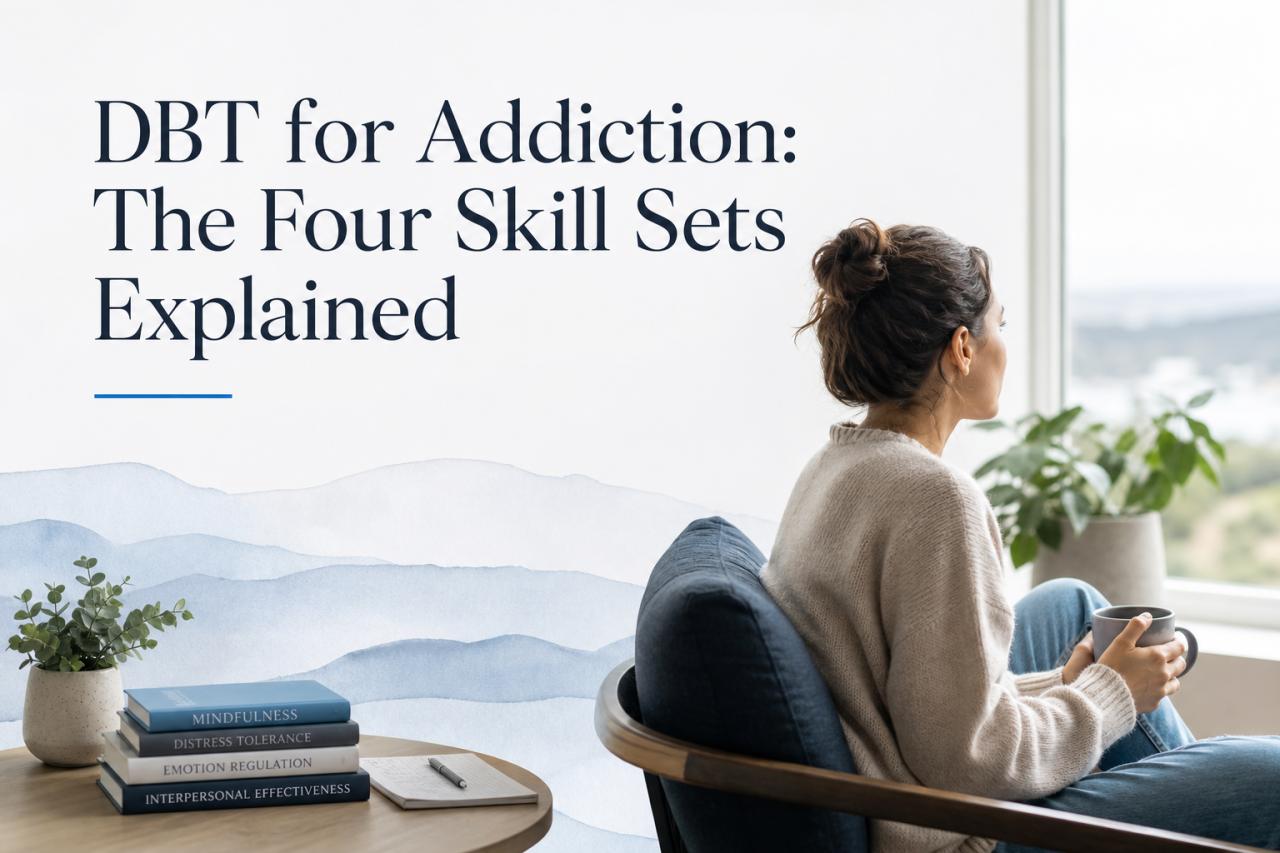
See what the four DBT skill sets look like during a craving, an argument, or a hard night, and where skills groups fit in PHP and IOP at Rize OC.
Know the 911 red flags, outpatient limits, and care factors families should use when alcohol withdrawal may require medical detox.
Take the Next Step
If you or a loved one is struggling with addiction or mental health, the Rize OC team is here to help — confidentially and with no obligation.