
Education
October 27, 20269 min read
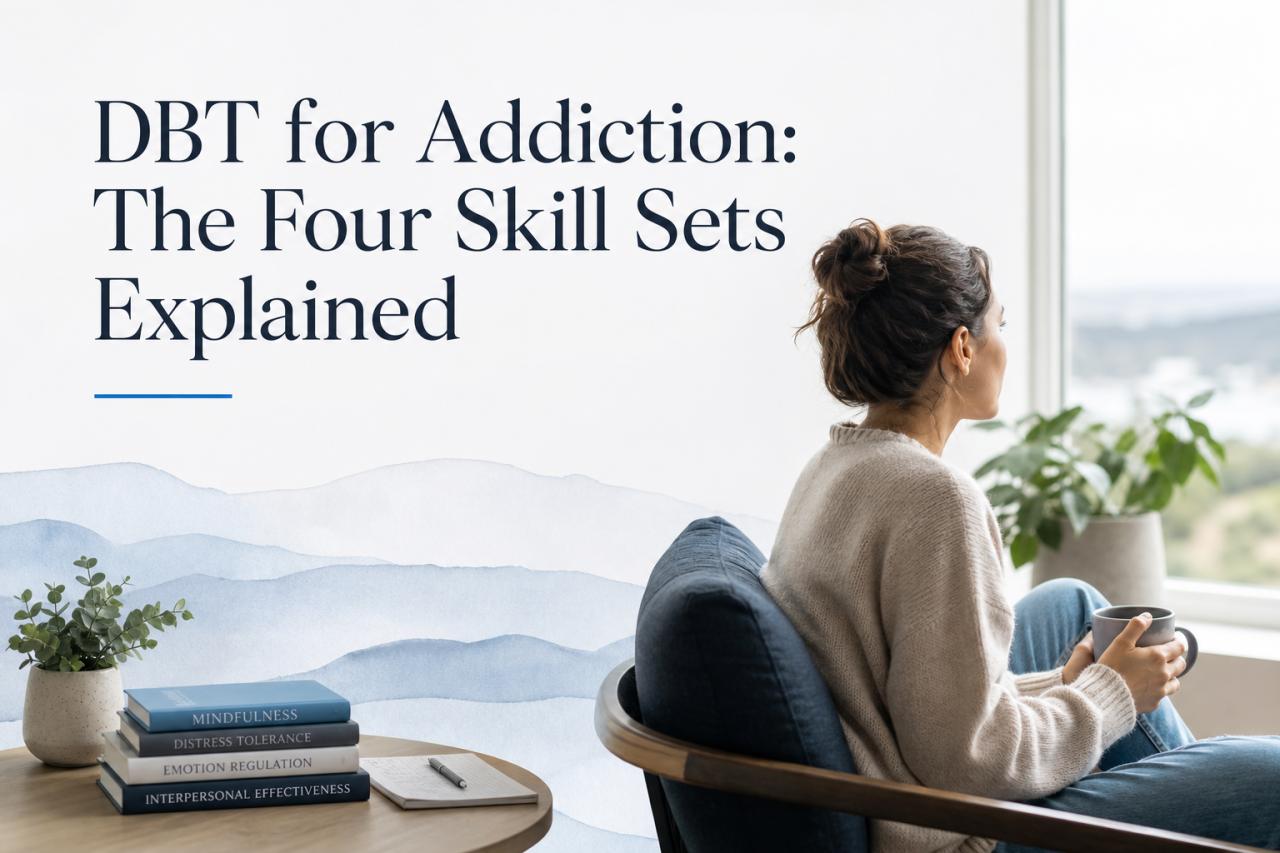
DBT for Addiction: The Four Skill Sets Explained
See what the four DBT skill sets look like during a craving, an argument, or a hard night, and where skills groups fit in PHP and IOP at Rize OC.
Rize OCRead
Same-day assessments · Orange County, CA
Rize OC
Editorial Team
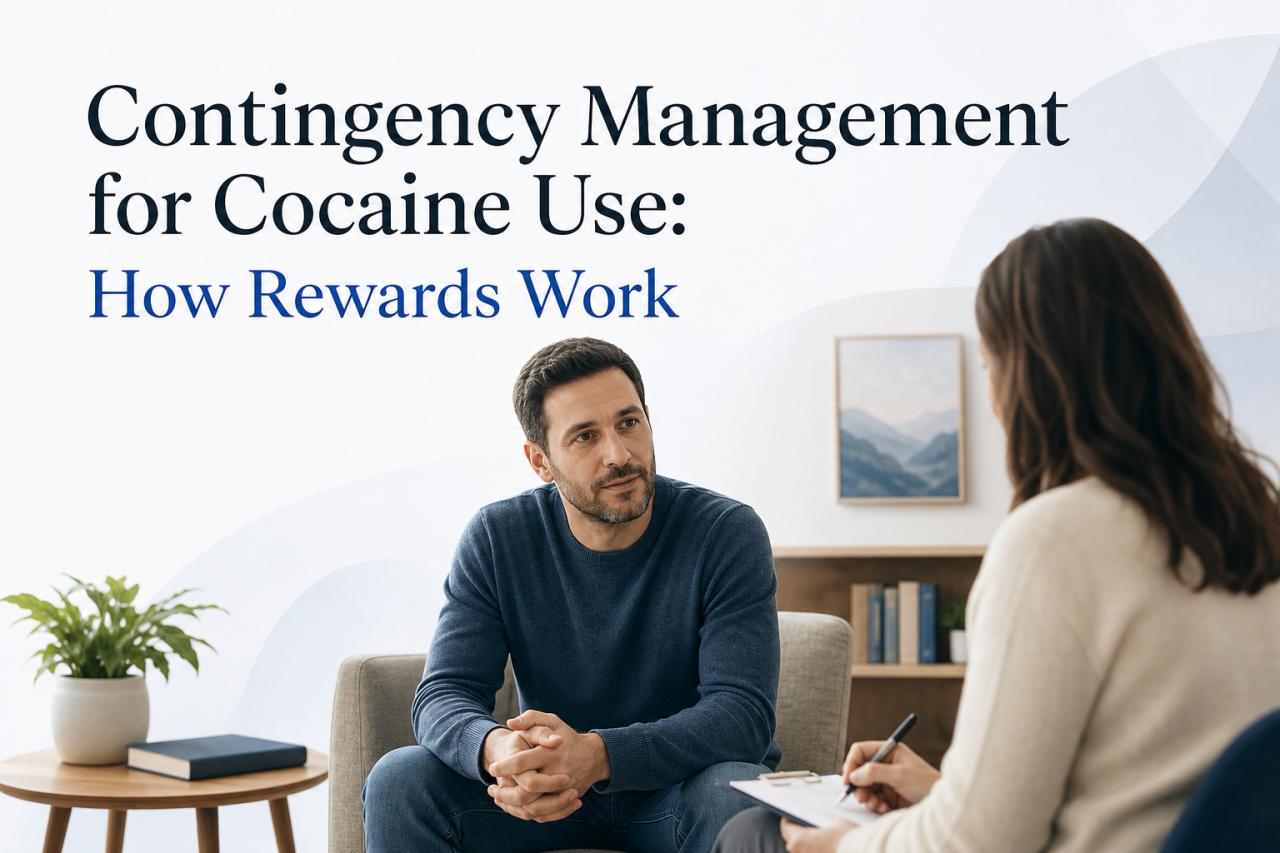
Contingency management for cocaine pays people small, verified rewards for each negative drug test, and it's the best-supported treatment for stimulant use disorder because the FDA hasn't approved a medication for it. You don't have to rely on willpower alone. The rewards give your brain a reason to stay on track while therapy builds longer-term skills.
If you or someone you love is thinking about suicide or self-harm, call or text 988 any time, day or night. You can also chat with a trained crisis counselor at [988lifeline.org](https://988lifeline.org). If someone is in immediate danger or has overdosed, call 911 right away.
The program rests on one rule: a verified negative drug test earns a reward, and a positive or missed test earns nothing. Behavioral scientists call this a contingency, meaning the reward depends on a specific, checkable behavior. NIDA describes contingency management as one of the behavioral approaches with the strongest evidence for stimulant use, and SAMHSA publishes guidance for programs that offer it.
Most programs follow the same basic steps. You give a urine sample on a set schedule, usually several times a week at the start, and staff check the result right away so the feedback comes while the choice is still fresh. A negative result earns a reward, such as a voucher or prize draw, and the program sets the size. Each negative test in a row can raise the next reward, while a positive or missed test resets it to the starting level. It doesn't end your treatment.
That reset keeps the design fair and practical. You aren't punished or dropped from care for returning to use. You simply start the climb again, and your clinician can talk with you about what happened and adjust your plan.
Cocaine leaves the body quickly, so frequent testing is what makes the schedule work. A verified test is also an honest record you can look at with your care team, instead of relying on memory or good intentions.
Rize OC names contingency management on its cocaine treatment page. Which therapies you receive, and how they're combined, is decided at your clinical assessment, not before.
In the first weeks, expect testing to be frequent and your schedule to be fairly fixed. Most programs ask you to come in on set days, give a sample, and hear the result before you leave. If you're in an outpatient program, those visits sit alongside your therapy sessions rather than replacing them.
As the weeks go on, programs often space the tests further apart once you've had a stretch of negative results. That's a general pattern, and the exact schedule varies by program. Your care team will tell you what yours looks like and why, so you aren't guessing about the next appointment.
A typical week has three parts. Testing comes first, and it's brief. Therapy is the second, where you work on triggers, cravings, and the situations that lead to use. The third is a short check-in with a clinician, who goes over your results and adjusts your plan if something isn't working.
Plan for practical details, too. Showing up on testing days is what earns the reward, so sort out work and transportation ahead of time. A missed visit counts the same as a positive test, so tell your clinician early if your schedule changes. They can often adjust the plan before a gap becomes a reset.
Fentanyl contamination in the cocaine supply is a real danger, and the CDC warns that illicit drugs can contain fentanyl without the person knowing.
If you're weighing a level of care, our intensive outpatient program in Orange County offers morning and evening tracks that fit around work.
The FDA hasn't approved any medication to treat stimulant use disorder, and that includes cocaine. The agency's drug safety information on stimulant use is the place to confirm that status, and it's the reason behavioral treatment carries the weight of care right now.
Cocaine acts on several brain chemicals at once, including dopamine, and that makes it hard to target with a single drug. NIDA notes that researchers have tested several medications for cocaine use, but none has shown enough benefit to earn approval. Work continues, so this could change. For now, you won't be offered a cocaine-specific prescription, and that isn't a sign anyone is holding something back.
Opioid and alcohol use disorders are different. Approved medications exist for them, which is why people often assume cocaine has one too. If you use more than one substance, a licensed prescriber may still recommend medication for the other substance or for a co-occurring mental health condition. Talk with your prescriber or pharmacist, who can check it against everything else you take. Don't start, stop, or combine anything on your own, and tell your care team about every substance you use, since mixing them raises risk.
At Rize OC, board-certified addiction medicine physicians lead treatment plans, and medication is used only when a licensed prescriber decides it's appropriate. For cocaine, that usually means the plan leans on behavioral care, with contingency management and therapy doing the main work.
Ask your clinician at assessment how they'd build your plan without a cocaine medication. A good answer names the therapies, the testing schedule, and how often your team checks in with you.
Rewards can get you through the first weeks, but cognitive behavioral therapy (CBT) is where you learn what to do when a craving hits at 9 p.m. on a Friday. Contingency management gives you a short-term reason to stay on track, and CBT teaches you to understand and change the patterns behind your use.
In CBT sessions, you and your therapist usually trace what happens before you use, including the people, places, moods, and thoughts that come first. Then you practice specific responses, such as leaving a situation, delaying a decision, or challenging the thought that says one time won't matter. Your negative test results give the two of you real information to work from, so you can see which skills held up and which situations still need work.
Rize OC pairs CBT with relapse-prevention planning, which maps out your highest-risk situations and what you'll do in each. Other methods may be added depending on what your assessment shows, including DBT skills for managing intense emotions and motivational interviewing if you feel unsure about change.
Skills built in therapy matter most after the rewards end. When the testing schedule winds down, you'll still have the habits and coping tools you practiced, and your plan can include aftercare so support doesn't stop with the incentives.
Many people who use cocaine are also living with ADHD, depression, or anxiety, and the two problems tend to feed each other. Cocaine can feel like it sharpens focus or lifts a low mood, but the crash afterward often deepens the same symptoms. That's why a plan that only targets the drug use can stall.
Rize OC's dual diagnosis care treats mental health symptoms and substance use together in one plan, so you aren't handed off between separate teams. At your clinical assessment, a licensed clinician looks at your physical and mental health, your safety, and your daily responsibilities before recommending a level of care. Tell them about any ADHD, depression, or anxiety symptoms, even if you think they're unrelated or you've never been formally diagnosed.
In practice, contingency management and CBT address the cocaine use directly, while the same CBT skills often apply to anxious thinking and low mood. Psychiatrists are embedded in our partial hospitalization program, and psychiatric medication management happens only when a licensed prescriber decides it's appropriate. If you already take medication for ADHD or another condition, bring the full list to assessment and talk with your prescriber or pharmacist before changing anything. Stimulant medications in particular need careful review alongside cocaine use.
Some symptoms need prompt attention. Intense paranoia, hearing or seeing things that aren't there, or a mood that swings sharply can signal something more serious. Mention these to your care team right away.
Outpatient treatment works when you're medically stable, have a safe place to live, and can attend your testing and therapy visits consistently. A step up is worth discussing if any of those three stops being true. Signs include repeated resets despite real effort, escalating use, or a home where staying away from cocaine isn't realistic.
A higher level may also be needed if you use alcohol, benzodiazepines, or opioids along with cocaine, since that can bring withdrawal risk that needs medical evaluation. The same goes for severe psychiatric symptoms, such as ongoing paranoia or thoughts of harming yourself, or any need for 24-hour supervision to stay safe.
Between those extremes sits a middle step. Our partial hospitalization program offers structured daytime treatment, and you return home or to sober living in the evening. If you're already in intensive outpatient care and keep struggling, moving to PHP adds structure without removing your life from the picture. Our comparison of IOP and PHP lays out the differences.
At assessment, a licensed clinician weighs withdrawal risk, physical and mental health, safety, home support, and daily responsibilities before recommending a level. The assessment is confidential and carries no obligation. If detox or 24-hour stabilization is the safer starting point, admissions will tell you plainly and help coordinate placement. Recommendations rest on clinical fit, not on pressure to choose a particular program.
Coverage depends on your plan. Benefits are verified before care starts, and payment plans are available. Rize OC doesn't accept Medi-Cal or Medicaid, so ask early if that applies to you.
You can call our admissions team at (949) 461-2620 to talk through where you are, or verify your insurance online first. Either way, you'll get a straight answer about which level fits.
About the Author
Helpful educational resources from Rize OC.
In This Article
Topics
Ready for Help?
Confidential support, same day.
See what the four DBT skill sets look like during a craving, an argument, or a hard night, and where skills groups fit in PHP and IOP at Rize OC.

You'll see how grief, trauma and substance use get assessed separately, then treated together, and how that points to PHP, IOP or standard outpatient care.

Separate treatment plans can miss how mood episodes, substance use, sleep, and medication changes affect one another.
Take the Next Step
If you or a loved one is struggling with addiction or mental health, the Rize OC team is here to help — confidentially and with no obligation.