

Guides
October 28, 20269 min read
Addiction Counseling Orange County: Weekly Sessions or a Program
You'll be able to tell whether one weekly appointment is a reasonable fit or whether IOP or PHP is the safer thing to ask about.
Rize OCRead
Same-day assessments · Orange County, CA
Rize OC
Editorial Team

A dual diagnosis IOP treats your mental health condition and your substance use together, in one plan, with one team, for roughly 3 to 9 hours of clinical time a week while you keep living at home. If the program runs two separate tracks that don't talk to each other, it's not integrated care, and the questions below will show you which kind you're looking at.
If you're thinking about suicide or harming yourself, or you're in an emergency, call or text 988 (Suicide & Crisis Lifeline), or call 911.
"Dual diagnosis" is the older, everyday term for what SAMHSA calls co-occurring disorders: a mental health condition and a substance use disorder in the same person at the same time. Depression with alcohol use, PTSD with opioid use, and anxiety with benzodiazepine misuse are common pairings. The National Institute of Mental Health also describes how the two often occur together, and neither one has to come first.
The two conditions tend to feed each other. Someone with panic attacks may drink to settle down, and the drinking can then worsen sleep and anxiety the next day. That loop is why treating only one side often leaves the other pulling you back.
An intensive outpatient program, or IOP, is the level of care where you attend scheduled treatment several days a week and sleep at home. At Rize OC, the IOP in Orange County runs from our Lake Forest clinic with 2 tracks, morning and evening, so it can fit around a job, school, or family. Groups stay at 8 clients or fewer, and you meet with a therapist one-on-one every week.
Put together, a dual diagnosis IOP means those groups and sessions address both conditions. Your anxiety, trauma, or mood symptoms get worked on in the same room, by the same team, as your cravings and triggers. Our dual diagnosis care page shows how we approach it.
In parallel care, a person sees one provider for depression or trauma and a different provider, or a different program, for alcohol or drug use. Each has its own goals, its own notes, and often its own schedule. Integrated care puts both conditions in a single treatment plan, written and reviewed by one team that talks to each other.
The gap shows up in small, practical ways. Say you tell your therapist you've been sleeping 3 hours a night and drinking to cope. In a parallel setup, that detail may never reach the person managing your substance use, so no one adjusts the plan. In an integrated program, the same team hears it and changes what your groups and sessions focus on that week.
Here's how to tell the two apart:
Integrated care doesn't mean every provider sits in one room all day. It means decisions about you are made together. SAMHSA's guidance on co-occurring disorders describes treating both conditions at the same time as the better-supported approach, so it's reasonable to expect a program to explain how it does that.
Most of your week is group therapy, with one individual session on top of it, spread across the 3 to 9 hours of clinical time the program asks for. Exact hours depend on your plan and your schedule, and your clinician will tell you what yours looks like after your assessment.
Groups are where much of the skill-building happens. In a dual diagnosis program, a session might teach DBT skills for riding out an urge or a spike of panic without reaching for a drink. Another might use CBT to look at the thought that sets off both a low mood and a craving. Relapse-prevention planning runs through the week, and so does motivational interviewing, which helps when you feel unsure about change. With groups capped at eight or fewer clients, you'll get a chance to speak and be heard.
Your weekly one-on-one session is where the plan gets adjusted. You can bring up a rough night, a conflict at work, or a trigger that came out of nowhere. If trauma is part of the picture, this is also where trauma-informed work happens, including EMDR with a licensed EMDR-trained therapist when it fits your plan. Some programs add somatic therapy or mindfulness-based practice alongside the talk therapy.
Psychiatric support comes in when your clinical team decides it's appropriate. That might mean a medication check-in, and we cover how that works in the next section.
If you choose the evening track, the same content runs after work hours. Most people pick based on when their energy is best and when their job leaves room.
Family support can be part of your week too, but only when you authorize it.
Medication in a dual diagnosis IOP is a decision a licensed prescriber makes with you, and it isn't a required part of treatment. At Rize OC, medication-assisted treatment or psychiatric medication management happens only when a prescriber decides it's appropriate for your situation. Some people take medication for depression, bipolar disorder, or an alcohol or opioid use disorder, and others do well with therapy alone.
Expect the conversation to start with your history. The prescriber looks at what you take now, what you've tried before, your substance use, and your physical health. The clinical assessment before enrollment also weighs withdrawal risk, which matters because withdrawal from alcohol, benzodiazepines, barbiturates, and opioids can be dangerous. If your use is heavy enough that stopping suddenly could harm you, you need a medical evaluation first, and admissions will help coordinate the safer step.
Tell the team about everything you use, including prescriptions from other doctors, over-the-counter products, and alcohol or other substances. Some combinations carry real risks, and an integrated team can only account for what it knows. Don't start, stop, or change any medication on your own, and bring questions about dosing or interactions to your prescriber or pharmacist.
The NIMH overview of mental health medications explains the main medication types in plain language, and it's a useful read before your first appointment.
Medication choices should also show up in your single treatment plan. If a prescriber adjusts something, your therapists should know, and your groups and individual sessions can account for any change in how you feel.
IOP tends to work when you're medically stable, have a safe place to sleep, and can reliably show up for scheduled sessions. If you're holding down a job or caring for family and your symptoms are real but manageable between sessions, that's the profile IOP was built around.
A higher level of care may be safer if any of the following apply:
Rize OC's Partial Hospitalization Program offers structured daytime treatment with psychiatrists embedded in the program, and you go home or to sober living in the evening. It suits people who need more daily structure than IOP gives. Our IOP versus PHP comparison lays out the differences in more detail.
Detox is a different question. We don't provide medical detox at our clinic. When 24-hour stabilization is safer, admissions says so plainly and helps coordinate placement, and many people step down into IOP afterward.
You don't have to decide this on your own. A licensed clinician completes a confidential, no-obligation assessment that weighs withdrawal risk, physical and mental health, safety, home support, and your daily responsibilities before recommending a level. If that assessment points to PHP or detox first, it's a clinical judgment about what's safest for you, not a verdict on how serious your situation is, and the recommendation can change as you stabilize.
Ask each program to describe, in its own words, who writes your treatment plan and who reads it afterward. A clear answer names a team that meets about you. A vague one usually means two providers working separately. These six questions will sort that out in a single phone call:
Ask whether you'll have one written plan that covers both your mental health and your substance use, and who reviews it with you.
Ask whether the same therapists and prescriber work together on your care, or whether you're referred to outside providers for one of the two.
Ask whether the groups address how symptoms and cravings affect each other, or whether they're separated by diagnosis.
Ask what changes in your plan if your mood drops or you return to use, and whether you'd be asked to leave or pause.
Ask how the program decides whether medication is right for you, and who makes that call.
Ask what would make them recommend a higher level of care or detox first, and how they'd help you get there.
Listen for specifics. A strong answer mentions group size, how often you meet one-on-one, and when psychiatric support is available. If a program can't explain how it coordinates care, that's useful information too.
Then ask about practical details like morning or evening schedules and what your insurance is likely to cover. Benefits vary by plan, and coverage isn't guaranteed until it's verified. You can verify your insurance online before you commit to anything.
If you'd like to put these questions to us, call Rize OC at (949) 461-2620. Our admissions team will answer them and set up a confidential clinical assessment, with no obligation to enroll.
About the Author
Helpful educational resources from Rize OC.
In This Article
Topics
Ready for Help?
Confidential support, same day.
You'll be able to tell whether one weekly appointment is a reasonable fit or whether IOP or PHP is the safer thing to ask about.
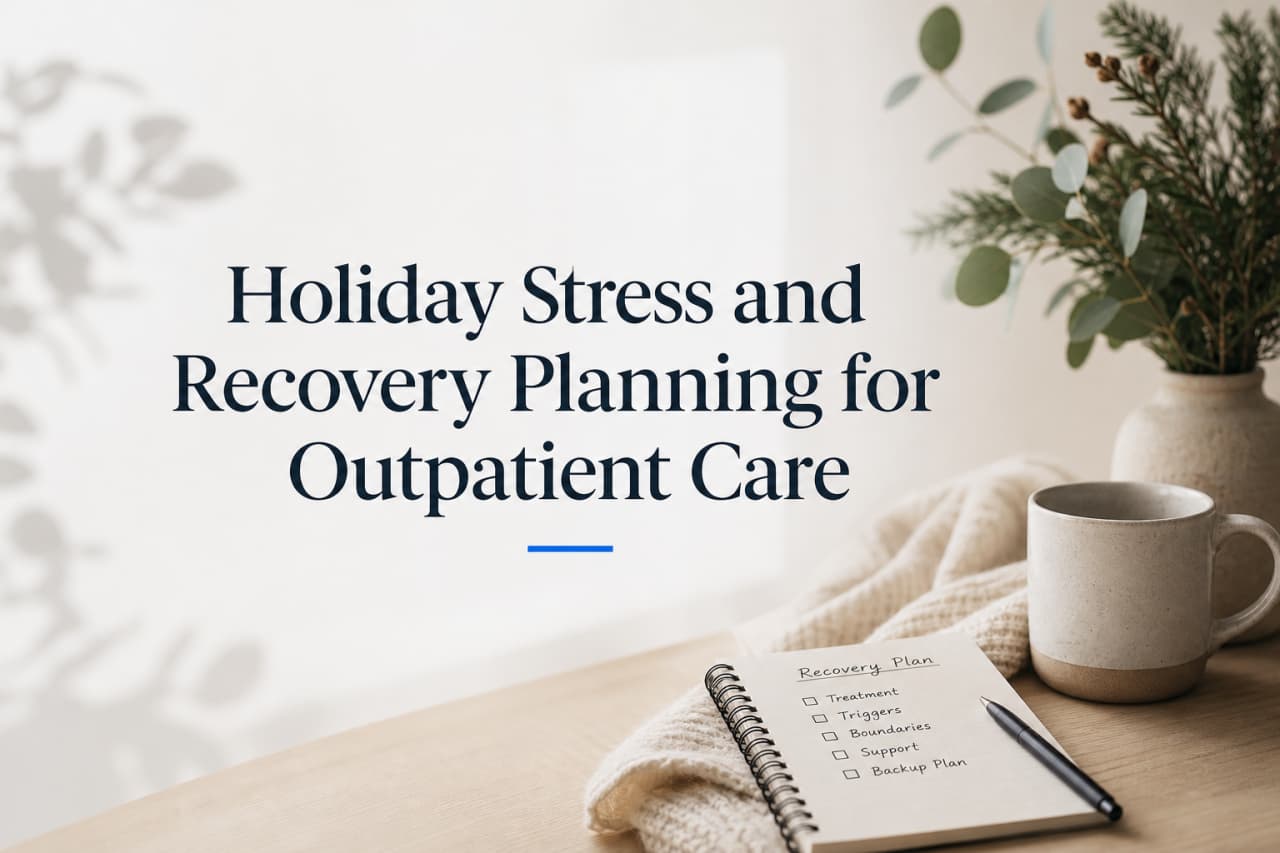
Prepare for November events with a practical outpatient checklist covering treatment schedules, triggers, boundaries, and backup plans.

A 90-day plan for the weeks after PHP or IOP, with what to schedule first, what to test later, and when to step care back up.



Take the Next Step
If you or a loved one is struggling with addiction or mental health, the Rize OC team is here to help — confidentially and with no obligation.