

Guides
September 28, 20269 min read
Individual Therapy Frequency in PHP and IOP: What to Expect
Compare one-on-one and group therapy dosage in PHP and IOP, with educational frequency ranges, sample weeks, and admission questions.
Rize OCRead
Same-day assessments · Orange County, CA
Rize OC
Editorial Team
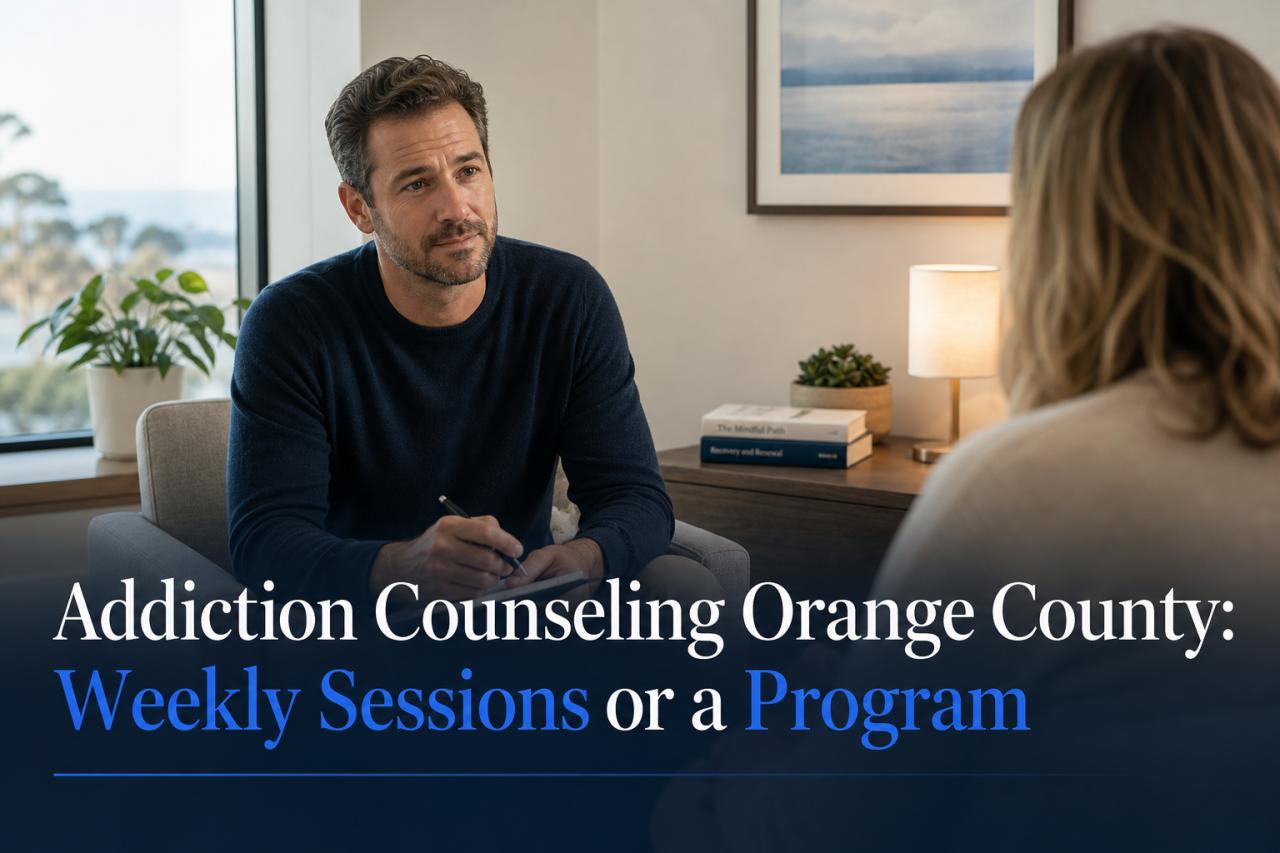
Plenty of people in Orange County start addiction counseling with one appointment a week, and that works when you're medically stable, safe at home, and substance use hasn't taken over most of your days. Daily drinking, opioid use, or benzodiazepines change that, because stopping suddenly can be dangerous and a medical evaluation should come before any counseling plan. Below, we sort weekly sessions, IOP, and PHP by withdrawal risk, safety, and time.
If you're thinking about suicide or self-harm, call or text 988 (Suicide & Crisis Lifeline). If you or someone else is in immediate danger or may be overdosing, call 911.
A typical session is a 45 to 60 minute private conversation with a licensed therapist or a certified drug and alcohol counselor. A licensed therapist holds a state license in a field like counseling, social work, or psychology, and a certified drug and alcohol counselor has specialized training in substance use. Both can lead the kind of work described here.
The first visit is mostly questions. Expect to talk about what you use, how often, what happened the last time you cut back, and what's going on at home and at work. Your counselor will also ask about sleep, anxiety, low mood, and past trauma, because those often drive substance use and shape what treatment should look like.
After that, sessions usually follow the week you just had. You might review a craving that hit on Thursday, plan around a situation you know is risky, or practice a skill for handling stress without using. Methods you may hear named include motivational interviewing, which helps you sort out your own reasons for change, and CBT, which looks at the link between thoughts, triggers, and use. DBT skills and relapse-prevention planning are common too.
Counselors also watch for signs that one hour a week isn't enough. If you mention shaking when you skip a drink, using more than you planned several days in a row, or feeling unsafe at home, a good counselor will bring up a medical evaluation or a more structured level of care. Raising that isn't a judgment of you. It keeps the plan matched to your risk. You can also ask your counselor directly how they decide when to recommend more support.
Weekly counseling fits best when substance use is a problem you can see but one that hasn't taken over your schedule. You still get to work, meet your obligations, and sleep most nights, and the use tends to happen in patterns you can name, like weekend drinking or stimulant use after stressful days. A single 45 to 60 minute session each week is the usual starting rhythm.
Four things usually need to line up before one hour a week makes sense. You're medically stable, and you haven't had shaking, seizures, or severe sweating when you skip a dose or a drink. Your home is safe, with no violence and no one pressuring you to keep using. You can reliably show up to appointments and do the between-session work, like tracking cravings or practicing a coping skill. And you haven't had a recent close call, such as an overdose or a night you can't remember.
If those hold, weekly sessions give you room to build skills while keeping your normal routine. They also work well as a step down after a program, when you've stabilized and want ongoing support. Rize OC offers standard outpatient care for people at that stage.
Weekly counseling is a starting point, not a commitment. Give it a few sessions, then check honestly whether your use is dropping, holding steady, or creeping up. If you're returning to use between appointments, or cravings are filling more of your week than the sessions can cover, that's useful information, and it's a reason to ask about a higher level of support rather than a sign you failed.
Withdrawal risk is the clearest sign. If you drink every day, take benzodiazepines, or use opioids regularly, stopping on your own can bring seizures or other medical emergencies, so you need a medical evaluation before any counseling plan. When 24-hour stabilization is safer, our admissions team says so and helps coordinate detox placement.
Safety is the second sign. Violence at home, no one sober nearby, or a recent overdose or blackout all mean one hour a week leaves too many hours uncovered. The same goes for severe depression, panic, or trauma symptoms that make it hard to function between sessions.
The third sign is how much of your week use takes up. The American Society of Addiction Medicine bases its levels of care on factors like withdrawal risk, medical and mental health conditions, readiness to change, relapse potential, and the recovery environment. Weekly sessions rarely cover that much ground.
A few patterns point the same way. You've returned to use after several weekly sessions despite real effort, or cravings and recovering from use take up most days rather than a few evenings. Missed work, skipped meals, or lost sleep are becoming routine, or mental health symptoms and substance use are feeding each other.
If two or more fit, ask about a structured option. An intensive outpatient program adds several hours of clinical time each week while you stay at home and keep working. A partial hospitalization program provides structured daytime treatment, and you return home or to sober living in the evening. Asking doesn't commit you to anything, and a licensed clinician can look at your situation and tell you which level fits.
Both programs keep the individual therapy you'd get in weekly counseling and wrap more clinical time around it. The main differences are how many hours you spend in treatment and what kind of work fills them.
IOP runs about 3 to 9 hours of clinical time a week, with morning and evening tracks so it can fit around a job or family schedule. You still meet one-on-one with a therapist each week, and you add group sessions of eight clients or fewer. In group, you hear how other people handle cravings and setbacks, and you practice skills like DBT distress tolerance or CBT trigger planning with real feedback. If you're eligible as a California resident, the virtual outpatient program delivers IOP by telehealth in a browser, with no app to download.
PHP is structured daytime treatment, and you go home or to sober living in the evening. Psychiatrists are embedded in the program, so medication questions and mental health symptoms get attention alongside substance use. Afternoons rotate experiential work such as art therapy, somatic movement, equine-assisted therapy, meditation, yoga, and community outings. Those sessions give you a way to practice calm and coping outside a talking-only format.
Both levels build in relapse-prevention planning, and family support is included when you authorize it. Medication-assisted treatment is considered only when a licensed prescriber decides it's appropriate, so talk with that prescriber or your pharmacist about any medication questions.
If you're comparing the two directly, our IOP vs PHP breakdown lays out how placement is decided. A clinician makes that call after meeting you, based on your withdrawal risk, safety, and daily responsibilities.
A licensed clinician completes the assessment with you, and it's confidential and carries no obligation to enroll. Expect a conversation rather than a test, and plan on answering the same kinds of questions a good counselor would ask in a first session, in more detail.
The clinician looks at five areas. They ask about withdrawal risk, including what you use, how much, how often, and what happened the last time you stopped or cut back. They review your physical health and your mental health, since anxiety, depression, or trauma symptoms can change which level of care is safest. They ask about safety, meaning whether your home is stable and whether anyone sober is nearby. They also ask about daily responsibilities, like your job, school, and family, so a recommendation fits the life you actually have.
It helps to bring a list of what you use and roughly how often, any medications you take, and the names of current doctors or therapists if you have them. Bring your ID and insurance card too if you plan to use benefits. Don't worry if you can't answer everything. Honest, approximate answers are more useful than polished ones, because the point is to match you with the right level of care.
The clinician then tells you what they recommend and why. That might be weekly counseling, IOP, PHP, or something higher. If 24-hour stabilization or detox is safer first, admissions says so plainly and helps coordinate that placement. Recommendations come from clinical fit, so you won't be pushed toward a program you don't need.
You can ask questions the whole way through, including what a different level would change and what would signal that it's time to step up or down. To set one up, reach our admissions team through the contact page or by phone.
Plans usually cover weekly counseling and IOP under different benefits, so one doesn't tell you what the other will cost. Weekly sessions often fall under outpatient behavioral health, with a copay or deductible per visit. IOP is billed as a program, and many plans require authorization before it starts. Benefits vary by plan, and coverage isn't guaranteed until it's verified.
Rize OC commonly verifies commercial PPO plans, including Aetna, Anthem, Cigna, Blue Cross Blue Shield, and UnitedHealthcare. We don't accept Medi-Cal or Medicaid, so if you hold one of those, don't assume a plan will transfer.
When you check your own benefits, ask whether your plan covers outpatient substance use treatment and requires prior authorization. Ask whether IOP is covered and how the deductible or coinsurance applies, whether there are limits on visits or days, and whether an in-network provider has to refer you first.
We verify benefits before care starts, so you'll know what your plan says before you commit to anything. Payment plans are available if there's a gap. For a broader look at what drives cost, see our guide to the cost of mental health treatment in Orange County. Your insurer's written answer is the one that counts.
If you're still unsure whether weekly sessions or a program fits, call us at (949) 461-2620 and we'll walk through your options. You can also verify your insurance online first and bring the results to that conversation.
About the Author
Helpful educational resources from Rize OC.
In This Article
Topics
Ready for Help?
Confidential support, same day.
Compare one-on-one and group therapy dosage in PHP and IOP, with educational frequency ranges, sample weeks, and admission questions.

If weekly sessions aren't keeping you steady, a structured outpatient program may be the next step. Here's how to tell, what to ask, and what happens when you call.

A 90-day plan for the weeks after PHP or IOP, with what to schedule first, what to test later, and when to step care back up.




Take the Next Step
If you or a loved one is struggling with addiction or mental health, the Rize OC team is here to help — confidentially and with no obligation.