
Guides
October 15, 202611 min read
Holiday Stress and Recovery Planning for Outpatient Care
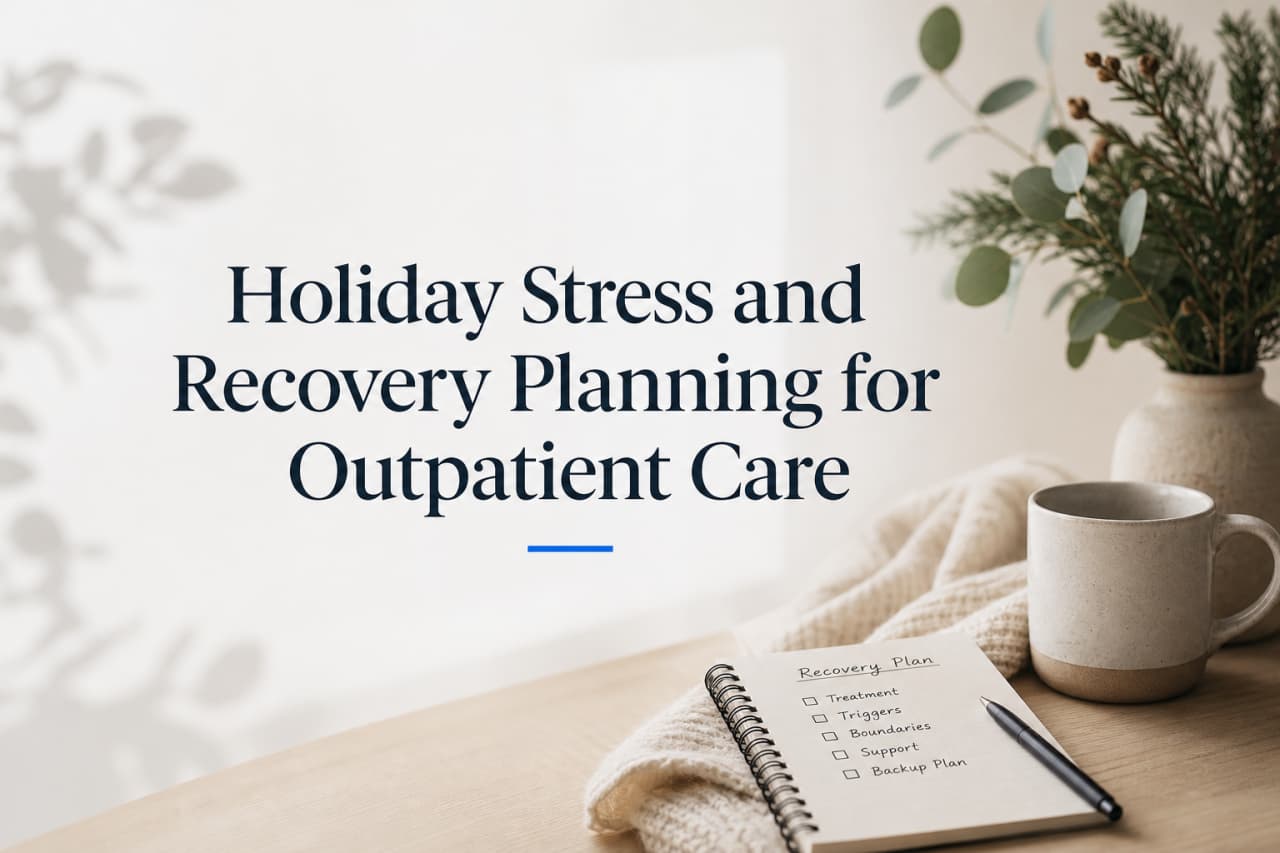
Prepare for November events with a practical outpatient checklist covering treatment schedules, triggers, boundaries, and backup plans.
Rize OCRead
Same-day assessments · Orange County, CA
Rize OC
Editorial Team

Calendar-year health plans commonly reset deductible accumulation on January 1, so a sound new year deductible strategy for starting treatment ranks clinical urgency first, then weighs what's left of your Q4 benefits against expected Q1 costs and continuity of care. If waiting could worsen your safety, withdrawal risk, or daily functioning, start the care conversation now.
If you or someone else is in immediate danger, call 911 or go to the nearest emergency department. For a suicidal or mental health crisis, call or text 988. Don't delay crisis care for a deductible reset. This article is general education, not medical or insurance advice.
Any immediate safety concern outweighs the savings from waiting. The National Institute of Mental Health recommends emergency care for life-threatening situations, and the SAMHSA crisis line resource explains what happens when you connect with the crisis line.
Severe withdrawal symptoms also need prompt medical evaluation. Risk depends on the substance, your pattern of use, your physical health, and any earlier withdrawal history, and a deductible calculation can't replace that assessment. The ASAM Criteria use clinical factors to guide placement and level-of-care decisions for people with substance use disorders.
Rize OC can talk through outpatient care and insurance timing, but admissions isn't an emergency service. If your condition is getting worse, ask for an assessment now instead of waiting for January.
Your accumulated deductible may return to zero at the start of a new benefit year. Many plans use January 1, though employer plans can follow a different schedule, so confirm the exact reset date with your insurer. A deductible is what you pay for certain covered services before the plan starts paying its stated share, according to the HealthCare.gov deductible glossary. Some services carry copays or coverage before the deductible is met.
| Plan term | What to verify | Why it affects timing |
|---|---|---|
| Deductible | Current accumulation and reset date | A December service and a January service may apply to different benefit years. |
| Coinsurance | Your share after the deductible | Meeting the deductible doesn't always reduce your responsibility to zero. |
| Out-of-pocket maximum | Current accumulation and included expenses | Covered in-network costs may fall after you reach this limit, subject to plan rules. |
| Copay | Amount by service type | A copay may apply before or after the deductible. |
| Network status | Facility, program, and clinician status | Out-of-network benefits can follow different deductibles or may be unavailable. |
| Authorization | Required approval and approved dates | Approval may be time-limited or need review after a plan change. |
Ask which benefit year applies to each date of service, and don't assume a claim processed in January belongs to January benefits. Rize OC's admissions team verifies commercial-plan benefits, including deductibles, co-pays and authorization requirements, which can surface the questions you still need answered before picking a start date. Your plan makes the final claim decision, and coverage isn't guaranteed.
A Q4 start deserves serious consideration when you've already met much of your deductible or out-of-pocket maximum. Covered in-network services before the reset may leave you owing less than the same services after accumulation returns to zero. That still depends on network status, authorization, service type, and your plan's terms.
Starting sooner can also preserve clinical momentum, since you may finish an assessment and begin an outpatient plan before holiday disruptions or a January coverage change. Care that continues across the reset still spans two benefit periods, so ask for separate explanations for December and January rather than one combined estimate.
Rize OC is in Lake Forest, Orange County. Before you pick a December date, ask the team what your commercial insurer confirmed and which details are still open. Then weigh that against the cost of delaying the assessment, time away from work, and the chance that symptoms get harder to manage.
Waiting can be reasonable when your condition is stable, a qualified clinician agrees a short delay is medically acceptable, and your January coverage is confirmed. A Q1 start may place a longer course of covered care inside one benefit year, which can make tracking simpler if you expect appointments over several months.
January isn't automatically cheaper. You could face a fresh deductible, a changed provider network, new authorization rules, or a different coinsurance rate, and your employer may replace the plan entirely. Compare the actual benefit terms for both periods before you decide.
Insurance timing shouldn't set the clinical level of care, and the outpatient options can be discussed in an admissions conversation. If symptoms intensify while you wait, contact a clinician or seek urgent evaluation. A date that looked fine in November can be unsafe by late December.
Work through the gates in order. Start with urgency, then look at current benefits, continuity needs, and logistics. Cost only moves forward once waiting has been judged clinically reasonable, which keeps a deductible estimate from outweighing safety or a level-of-care recommendation.
| Decision gate | Start before reset is stronger when | Start after reset is stronger when |
|---|---|---|
| Clinical urgency | Symptoms are worsening, safety is uncertain, or withdrawal risk needs assessment. | A clinician considers a short delay medically reasonable and symptoms remain stable. |
| Current benefits | You have substantial deductible or out-of-pocket accumulation for the current year. | Little current-year accumulation exists and January benefits are confirmed. |
| Continuity | Waiting may interrupt work, relationships, sleep, medication follow-up, or daily functioning. | A planned January start supports consistent attendance without creating a risky delay. |
| Coverage changes | Your current network and authorization terms are confirmed through December. | The January plan has been verified and offers workable coverage for the recommended care. |
| Practical schedule | You can attend assessment and early appointments during Q4. | Holiday travel or work obligations would cause immediate attendance gaps. |
Mixed answers are common. If the urgency gate points toward immediate assessment, take the earlier clinical conversation and sort out benefits alongside it. If urgency is low, compare both benefit years in writing, and remember that your insurer controls coverage and claim payment.
Safety decides the start date first, and insurance timing comes second.
Confirm both current-year and next-year terms before you compare dates. One benefit quote rarely answers the whole question, because deductible accumulation, network participation, and authorization can change on different timelines. Call the number on your insurance card and write down the representative's name, a reference number, and the date of the call.
Ask whether the plan follows a calendar year and when exactly the deductible resets. Request your current member-level and family-level deductible accumulation if both apply, plus your in-network out-of-pocket accumulation and which expenses count toward it. Find out what copay or coinsurance applies to the recommended outpatient service before and after the deductible. Confirm network status for the facility, the program, and the treating clinicians, since those contracts can differ. Ask whether prior authorization, a referral, or continued-stay review is required, and how December and January services will be assigned to each benefit year. Finally, ask about January changes to premiums, deductibles, network rules, exclusions, and behavioral health administration. If in-network status can't be confirmed, request the plan's explanation of out-of-network benefits.
Treat the insurer's answers as a planning document, not a promise. Final responsibility can depend on coding, medical-necessity review, authorization, and claim processing. To have admissions check your commercial plan, call Rize OC at (949) 461-2620 or submit the online verification form with your name, email, phone, insurance provider and policy number.
Logistics come after safety and coverage as a tie-breaker. Adults planning outpatient care usually have to coordinate work hours, transportation, caregiving, and holiday travel, and a favorable benefit period isn't worth much if you can't attend the assessment or early appointments consistently.
Ask admissions what the first two weeks may involve for the program you're considering. Then check your work calendar, available leave, the drive to Lake Forest, and any travel that would interrupt attendance. If telehealth is an option, confirm both clinical fit and insurance coverage rather than assuming every appointment can be virtual. Rize OC's virtual outpatient program is open to eligible California residents, and an assessment decides whether it's safe and effective for you.
Schedules around Orange County tighten in late December. Give yourself time to gather insurance information and talk through timing before the final business days of the year. Bring your ID, insurance card, and a medication list if you have one.
Recheck benefits if your insurer, employer plan, or recommended level of care changes. An authorization for one outpatient service may not apply to another, and a plan change can alter network status even when you stay with the same provider. Ask for a new verification instead of carrying December assumptions into January.
A clinical assessment should guide level of care, and deductible status shouldn't pick between standard outpatient, intensive outpatient, partial hospitalization, or withdrawal management. If the recommended level changes, verify that new service on its own, since coverage rules and your share of the cost may differ.
Rize OC doesn't accept Medi-Cal or Medicaid. People covered by Medi-Cal can use the California DHCS county mental health plan contacts to find public pathways in their county. If you also have commercial coverage, admissions can verify that policy.
Rize OC can answer program and admissions questions, while your insurer remains the source for final benefit terms. These answers can help you prepare for both conversations.
No. Your plan may still require copays or coinsurance after the deductible is met. Network status, authorization, covered-service rules, and the out-of-pocket maximum can also affect what you owe. Premiums and some noncovered or out-of-network expenses may not count toward the out-of-pocket limit, so verify each term with your insurer.
No. Many plans follow the calendar year, but some employer plans use a different benefit year. Your insurance card may not show the reset date, so check the plan document or call member services. Then ask whether January brings changes to the deductible, network, coinsurance, or behavioral health administrator.
It depends on the authorization dates and plan rules. A new benefit year doesn't always cancel an existing authorization, but a changed insurer or policy can require another review. Ask for the approved service, the date span, any visit limits, and continued-review requirements, and recheck if your level of care changes.
Worsening symptoms call for prompt clinical guidance, so contact a clinician or the admissions team to arrange an assessment. Potential savings never justify postponing urgent care, and the emergency steps in the callout near the top of this page apply any time.
Yes, for commercial plans. The admissions team contacts your insurer to check out-of-network benefits, deductibles, co-pays, and authorization requirements, though verification doesn't guarantee coverage or payment. Rize OC commonly verifies commercial PPO plans such as Aetna, Anthem, Cigna and Blue Cross Blue Shield.
No. Medi-Cal members can contact their county mental health plan or California DHCS for public behavioral health pathways. If commercial insurance also applies, ask Rize OC to verify that policy.
Compare dates with real benefit information. Ask Rize OC admissions to verify your commercial plan and talk through outpatient care in Lake Forest. Bring your insurance card, your planned January coverage, and any authorization notices.
About the Author
Helpful educational resources from Rize OC.
In This Article
Topics
Ready for Help?
Confidential support, same day.
Prepare for November events with a practical outpatient checklist covering treatment schedules, triggers, boundaries, and backup plans.

Before your first day at a Lake Forest outpatient clinic, find out what to confirm about parking, appointment hours, and family visits, and who to call if your plans change.

You'll know what device, internet connection, and room you need for virtual IOP, and how to keep sessions private in a shared home.




Take the Next Step
If you or a loved one is struggling with addiction or mental health, the Rize OC team is here to help — confidentially and with no obligation.