

Guides
October 15, 202612 min read
Returning to a High-Stress Career After Dual Diagnosis Care
A practical framework for protecting aftercare, managing work stressors, and responding early when warning signs appear.
Rize OCRead
Same-day assessments · Orange County, CA
Rize OC
Editorial Team
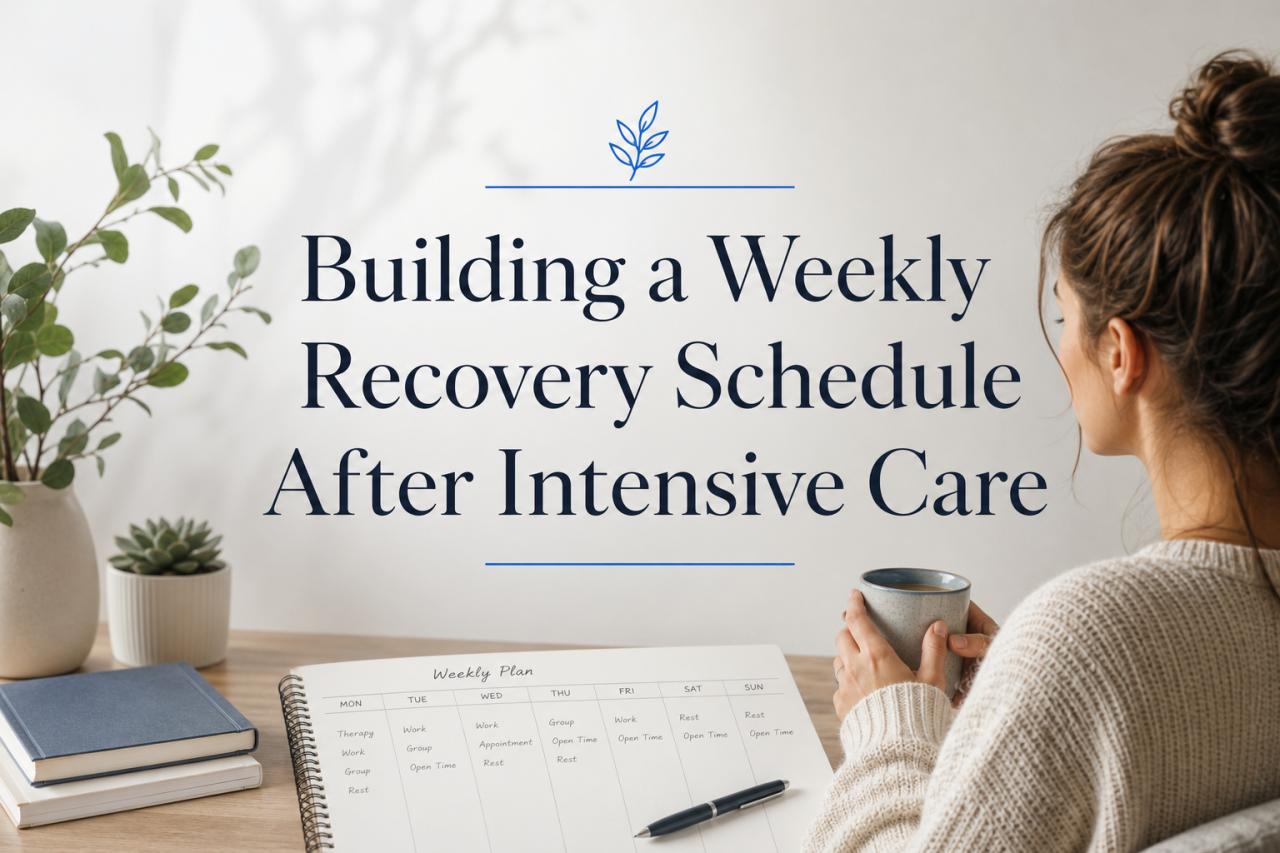
If you're stepping down from PHP or IOP, a weekly recovery schedule after intensive care starts with treatment, sleep, meals, work, and transportation on the calendar before optional tasks claim the gaps. The hours your program used to fill now belong to you, and they need a purpose. Start from your discharge plan, add real travel buffers, and protect some open time so you aren't copying a program day that no longer exists.
This guide provides general education, not medical advice. Your clinician or discharge team should determine your level of care, appointment frequency, medication plan, and response to worsening symptoms. In an emergency, call 911 or use the [988 Suicide & Crisis Lifeline](https://988lifeline.org/). Seek emergency help for a suspected overdose or severe withdrawal symptoms.
Your schedule should cover six kinds of time: clinical care, sleep, daily living, recovery support, work or school, and open space. Treatment appointments go in first because they're the hardest to move. Sleep and meals come next, and work, errands, and social plans have to fit around those anchors without crowding them out.
The four dimensions of recovery described by SAMHSA are health, home, purpose, and community. Use them as a quick calendar check. A week packed with appointments but empty of groceries, household tasks, work planning, or supportive contact still has holes. Rize OC's outpatient continuum in Lake Forest can help you sort how formal care sits beside community support and daily duties.
| Calendar block | What belongs there | Planning rule |
|---|---|---|
| Clinical care | Outpatient groups, therapy, medical visits, and approved telehealth appointments | Enter confirmed times before work shifts or optional plans |
| Sleep | A repeatable bedtime, wake time, and wind-down period | Protect the full block rather than recording bedtime alone |
| Daily living | Meals, groceries, laundry, transportation, and household duties | Assign a day and time instead of leaving them for later |
| Recovery support | Peer meetings, sponsor or mentor contact, family support, or community activities | Choose options you can attend consistently |
| Work or school | Shifts, classes, study periods, and deadlines | Include preparation and travel time |
| Open space | Rest, schedule changes, and unplanned needs | Keep some time unassigned each week |
Move every confirmed piece of your discharge plan into one calendar before you add optional commitments. Use the same calendar for treatment, work, and personal tasks, because separate systems hide conflicts until you're already late. The ASAM Criteria relies on ongoing assessment to guide care placement and continued service planning, so your schedule should change when your clinical needs change.
Gather discharge paperwork, upcoming appointment details, your work or school calendar, and transportation information. Enter outpatient groups, therapy sessions, medical visits, and other required care at their confirmed times. Block planned sleep and wake windows for all seven days. Add work, school, caregiving, and the prep those duties need. Time each trip for the hour you'll actually travel, including parking, check-in, and the ride home. Place meals and prescribed medication reminders on a repeatable rhythm, following your prescriber's directions. Then add recovery support and one or two practical household tasks. If care collides with other responsibilities, review the finished week with your clinician.
A step down from PHP or IOP usually opens hours your prior program used to fill, so don't book every minute. At Rize OC, you can bring a proposed calendar into an outpatient planning discussion and catch conflicts before the week starts.
A work-based template should protect care on selected evenings and leave other nights free for food, household needs, and rest. The sample below assumes a weekday job and uses illustrative times. It doesn't describe Rize OC's current program schedule or prescribe how many groups you need, so replace every placeholder with the appointments your care team recommends.
| Day | Before work | Workday | Evening | Sleep block |
|---|---|---|---|---|
| Monday | 6:30 a.m. wake, breakfast, commute | 8:30 a.m. to 5:00 p.m. work with lunch | Dinner, outpatient group placeholder, wind-down | 10:30 p.m. to 6:30 a.m. |
| Tuesday | Morning routine and breakfast | Work with a planned midday check-in | Peer support, household task, open time | 10:30 p.m. to 6:30 a.m. |
| Wednesday | Morning routine and commute | Work with lunch protected | Individual appointment placeholder and dinner | 10:30 p.m. to 6:30 a.m. |
| Thursday | Morning routine and breakfast | Work with end-of-day transition time | Dinner and outpatient group placeholder | 10:30 p.m. to 6:30 a.m. |
| Friday | Morning routine and commute | Work with weekly task review | Groceries, low-demand social time, or rest | 10:30 p.m. to 6:30 a.m. |
| Saturday | Wake near the weekday range and eat | Errands and one planned responsibility | Community support, meal preparation, open time | Chosen weekend sleep window |
| Sunday | Breakfast and household reset | Family time, recreation, or rest | Calendar review and Monday preparation | Return to weekday sleep window |
Test the commute before you trust this structure. Someone working outside Lake Forest may need a longer transition between work and an Orange County appointment. If travel makes an evening block unrealistic, ask about a different appointment time or clinically appropriate virtual care rather than building a plan that depends on perfect traffic every week.
Use your least flexible responsibility as the first anchor, then place care inside protected windows. A part-time schedule can still crowd fast when shifts change weekly. School adds deadlines outside class hours, and caregiving hangs on another person's needs, so backup coverage belongs in the plan from day one.
| Situation | Sample weekly pattern | Likely conflict | Practical response |
|---|---|---|---|
| Part-time work | Work Monday, Wednesday, and Friday; appointments Tuesday and Thursday | A manager requests an extra shift during care | Mark clinical times as unavailable before each work schedule is posted |
| College or training | Classes on three days; outpatient care on two lighter days; study blocks after meals | Assignments expand into sleep or appointment time | Break deadlines into shorter blocks earlier in the week |
| Family caregiving | Care duties entered first; appointments placed during confirmed backup care | Backup care cancels | Identify a second contact and ask the provider about rescheduling rules |
| Changing shifts | Schedule care around the most stable work window | Work hours change with little notice | Discuss predictable availability with the employer and care team |
Rize OC has outpatient options for adults balancing treatment with work and other responsibilities. Virtual care may cut transportation time when it's available and clinically appropriate. If your care team recommends returning to IOP-level support, ask whether an in-person or virtual IOP schedule can work with your obligations.
No single number of open hours fits everyone. Start with a buffer around clinical appointments and at least one unassigned block on a day off, then review what actually happened. Open time leaves room for a delayed appointment, a longer commute, rest after a hard session, or a household need that couldn't wait.
White space is part of the plan.
Track patterns instead of judging one rough day. Repeated lateness, skipped meals, reduced sleep, or missed care means the calendar needs fewer demands. Long stretches without contact or purpose may call for another recovery support block. A schedule can also look fine on paper while demanding too many transitions between work, home, and treatment.
| What you notice | What it may mean | Calendar change to discuss |
|---|---|---|
| Appointments and basic routines happen consistently | The current load may be workable | Keep the structure for another week |
| You're often late or eating on the run | Travel and transition time may be too short | Increase buffers or move an optional task |
| Sleep shifts later across the week | Evening demands may be crowding the wind-down period | Move chores or social plans earlier |
| Symptoms, cravings, or isolation increase | Your current support may need review | Contact your care team rather than waiting for the next calendar check |
Your backup schedule should name what happens after a missed appointment, rising symptoms, a transportation problem, or a return to substance use. Write these decisions while things are stable. Include provider contact information, trusted support people, transportation alternatives, urgent care instructions, and the next safe action.
The National Institute on Drug Abuse explains that a return to drug use can signal a need to resume treatment, change it, or add another service. If you return to use, contact your provider promptly and share any immediate safety concerns rather than waiting for the next weekly review.
Create a minimum-day plan for periods when the full calendar won't work. It should include scheduled clinical care, food and water, prescribed medication as directed, one support contact, and your planned sleep window.
Keep the backup plan where you can reach it. If the Lake Forest team is part of your care, save Rize OC's number, (949) 461-2620, in your phone. Your clinician may give different instructions based on your diagnosis, substances used, medication, and medical history.
Travel time must match the actual weekday and hour of your appointment. Rize OC is in Lake Forest, but work, school, family duties, or peer meetings may pull you elsewhere in Orange County. A route that works on a weekend often takes longer after a weekday shift.
Test one representative trip before you lock the week, including the walk from your car, check-in time, the appointment itself, and the return home. If work ends at 5:00 p.m. and care begins at 5:30 p.m., that block only works when your real route, parking, and check-in requirements fit inside the window.
Meal timing matters too. An evening appointment may need a packed meal or a planned stop before the session, depending on your schedule and care instructions. For virtual appointments, reserve a private location, confirm your internet connection, and avoid placing the session during a commute. Virtual access removes a drive, but you still need protected time.
Set one brief calendar review at the same time each week. Sunday evening may suit a weekday employee, while another day may fit changing shifts. Look at what happened, update the next seven days, and bring repeated problems to your outpatient clinician. Rize OC clients can use this review to prepare specific questions about care in Lake Forest.
| Review question | Decision for next week |
|---|---|
| Which appointments did I attend, miss, or reach late? | Keep workable times and flag conflicts for the provider |
| Did work, school, or caregiving displace care? | Move optional tasks or discuss a different care time |
| Where did transportation take longer than planned? | Replace estimated travel with the time the trip actually took |
| Did I have enough time for meals and sleep? | Protect those blocks before adding new commitments |
| Which support contacts did I use? | Schedule the useful contacts again |
| Did symptoms, cravings, or substance use change? | Tell the care team and ask whether the current plan still fits |
Change one or two calendar elements at a time unless your clinician recommends an immediate care change. Smaller revisions make the cause of a problem easier to spot. If the same conflict shows up for two weeks, treat it as a schedule problem rather than counting on extra effort.
Full-time work may fit if you can attend recommended care and keep basic routines intact, but your clinical team should guide the timing. Review the actual job demands, commute, appointment schedule, and any workplace flexibility before you pick a return date. A desk job with stable hours creates a different calendar than rotating shifts, fieldwork, or frequent travel.
The right number depends on your discharge plan, current symptoms, substance use risk, and available support. Enter required outpatient groups first, then choose community support you can attend consistently. A packed meeting calendar can crowd out sleep, meals, or work, while too little contact can leave long stretches without support. Ask your clinician to review the mix.
Contact the provider and follow its rescheduling or safety instructions. Avoid forcing a replacement session into an already crowded day without checking availability. Record why the appointment was missed, since transportation problems, work conflicts, forgotten reminders, and worsening symptoms each call for a different calendar fix.
Virtual care depends on clinical fit, provider availability, privacy, technology, and the service being delivered. Some appointments may work remotely while others stay in person. If virtual IOP or outpatient care is under discussion, ask how attendance, emergencies, drug testing when applicable, and private participation are handled.
Coverage varies by plan, service, provider network, authorization rules, and medical necessity. Rize OC can provide free commercial-plan verification before you rely on a proposed schedule. Rize OC doesn't accept Medi-Cal. People with Medi-Cal can review public behavioral health pathways through the California Department of Health Care Services or their county plan.
Rize OC can discuss outpatient options in Lake Forest and verify commercial insurance benefits. Call (949) 461-2620 to speak with the team.
About the Author
Helpful educational resources from Rize OC.
In This Article
Topics
Ready for Help?
Confidential support, same day.
A practical framework for protecting aftercare, managing work stressors, and responding early when warning signs appear.
Prepare for November events with a practical outpatient checklist covering treatment schedules, triggers, boundaries, and backup plans.

Compare IOP dayparts by energy, work, childcare, sleep, travel, clinical fit, and insurance before you pick a schedule.




Take the Next Step
If you or a loved one is struggling with addiction or mental health, the Rize OC team is here to help — confidentially and with no obligation.