

Education
August 13, 202611 min read
PTSD, Trauma, and Alcohol: Breaking the Self-Medication Cycle
Map the trauma-alcohol cycle, recognize when therapy-only may fall short, and see what structured dual care adds.
Rize OCRead
Same-day assessments · Orange County, CA
Rize OC
Editorial Team
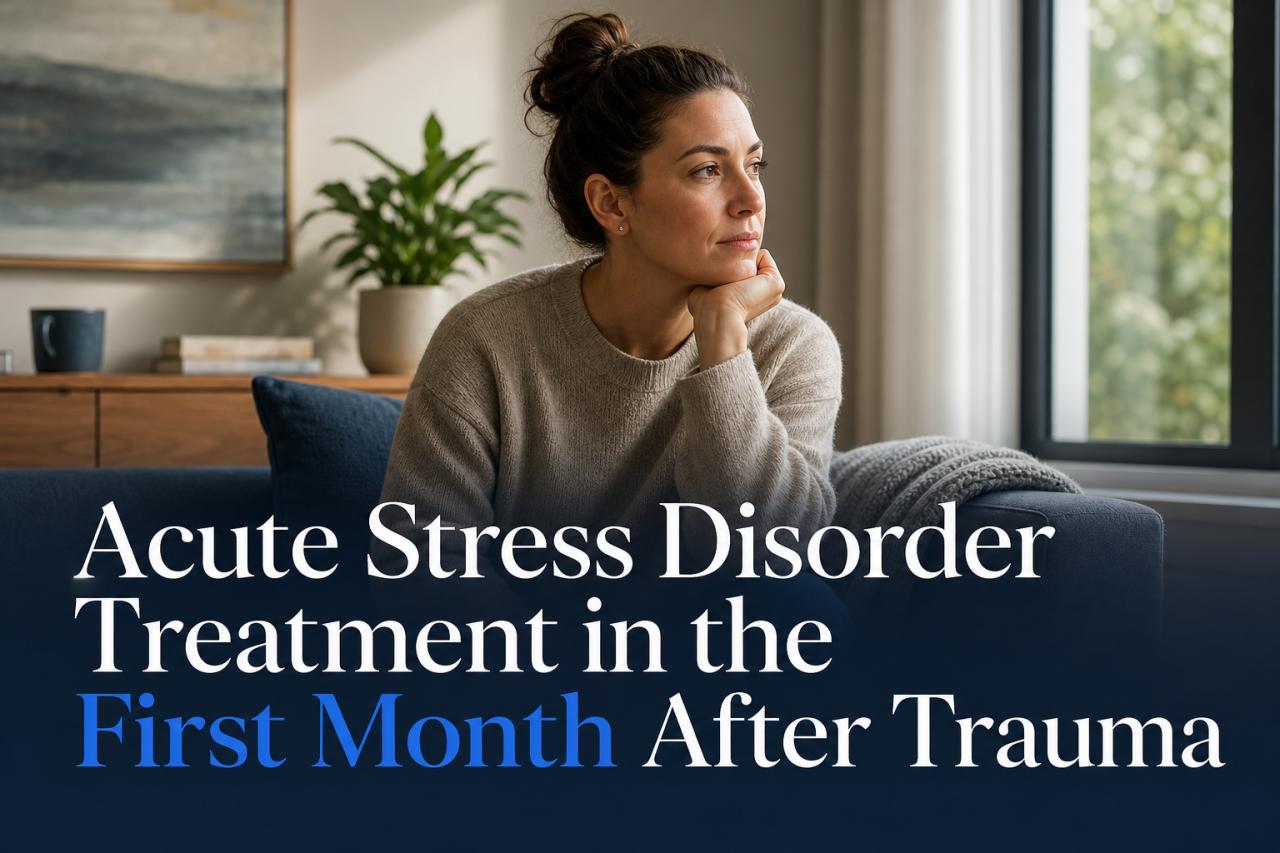
Acute stress disorder treatment in the first month after a trauma usually means trauma-focused therapy, steady sleep and routine, and a plan to avoid drinking or using drugs to cope. Flashbacks, numbness, and broken sleep that start within days of a frightening event are common and treatable. A clinician can assess what you need now.
If you or someone you love is thinking about suicide or self-harm, call or text 988 any time, day or night. You can also chat with a trained crisis counselor at [988lifeline.org](https://988lifeline.org). If someone is in immediate danger, call 911 right away for emergency help.
Acute stress disorder can only be diagnosed from about three days to one month after a traumatic event, and that short span is why early care matters. According to the American Psychiatric Association's DSM-5-TR overview of trauma- and stressor-related disorders, symptoms that last longer than a month are evaluated for PTSD instead. If you're in week two and still jumpy, numb, or awake at 3 a.m., you're inside the window where an ASD diagnosis applies.
The National Center for PTSD notes that many people's symptoms ease on their own over the first weeks, and some people's don't. Nobody can tell on day ten which group you'll fall into. That's the reason to get assessed now rather than wait and see.
An assessment is a conversation, not a commitment. At Rize OC, a licensed clinician completes a confidential, no-obligation clinical assessment that looks at your symptoms, your physical and mental health, your safety, your support at home, and your daily responsibilities. From there, the clinician recommends a level of care, which for many adults with early trauma symptoms is outpatient or intensive outpatient treatment that fits around work and family.
Before you call, it helps to jot down when the event happened and what symptoms you've noticed since, how much you're sleeping, whether nightmares are waking you, whether you've been drinking or using more than usual to settle down, and any medications you take now.
The clinician will ask about all of these, and honest answers lead to a better plan. Nothing you say about alcohol or drug use will be treated as a failing. It's simply information that changes what care makes sense.
The main difference between acute stress disorder and PTSD is timing. ASD is diagnosed from about three days to one month after the event, and PTSD is diagnosed when symptoms continue past that first month. The National Center for PTSD describes ASD as a short-term reaction that can resolve or can develop into PTSD, so the label changes with the calendar, not with how bad the symptoms feel.
The symptoms overlap heavily. Intrusive memories, nightmares, avoiding reminders, feeling detached, being easily startled, and poor sleep can all appear in both. In ASD, the DSM-5-TR also lists dissociative experiences, such as feeling unreal or being in a fog, among the symptoms a clinician considers. A person with ASD may not go on to develop PTSD, and some people who later receive a PTSD diagnosis never met the criteria for ASD at all.
What that means for you is practical. If your symptoms are still going strong as the one-month mark approaches, the diagnosis may change, but the care you're receiving doesn't have to start over. Trauma-focused therapy that begins in week three can continue into month two without a gap.
If your symptoms continue past the first month, our page on PTSD treatment describes how ongoing trauma symptoms are treated at Rize OC.
Early treatment usually starts with a few focused sessions that teach you to settle your body, sleep, and talk about what happened at a pace you can handle. The National Center for PTSD describes trauma-focused cognitive behavioral therapy as the main talk therapy for acute stress disorder, and it doesn't promise that starting early will prevent PTSD.
At Rize OC, trauma-focused CBT and EMDR are both used to treat trauma and PTSD, and your clinician chooses between them at assessment based on your symptoms and what you're ready for. Licensed EMDR-trained therapists deliver the EMDR. Trauma-informed care means you aren't pushed to retell the event before you feel steady enough to do it.
Between sessions, the work is practical. You'll practice skills such as mindfulness and DBT-style distress tolerance for the moments when a flashback hits, and you'll build a simple routine around sleep, meals, and movement. Somatic therapy can help if your body stays keyed up even when your mind feels calm.
Most adults at this stage fit an outpatient or intensive outpatient level of care, with morning and evening tracks that work around a job. Groups run eight clients or fewer, and IOP includes weekly individual therapy. If you can't come to Lake Forest, eligible California residents can join the virtual outpatient program from a browser with no app download.
If you're also drinking or using to cope, the plan treats both at once under dual diagnosis care, with relapse-prevention planning added. Your clinician will say plainly if a higher level of care would be safer, and admissions will help coordinate it.
Medication isn't the first-line treatment for acute stress disorder, and no medicine is a standard part of the first month for everyone. The National Center for PTSD points to trauma-focused therapy as the main approach, so medication is usually considered when a specific symptom, like severe insomnia or intense anxiety, is getting in the way of daily life or of therapy itself.
At Rize OC, psychiatric medication management happens only when a licensed prescriber decides it's appropriate for you. That decision follows a review of your symptoms, your medical history, what you already take, and whether you've been drinking or using substances. Psychiatrists are embedded in the Partial Hospitalization Program, and board-certified addiction medicine physicians lead treatment plans, so someone with the right training can weigh those details together.
The National Institute of Mental Health explains that medications for trauma-related conditions are meant to be paired with therapy and managed by a health care provider. Some sleep aids and anti-anxiety medicines can be risky when mixed with alcohol, and some can cause dependence or dangerous withdrawal. That's why you should tell the prescriber about every substance you've used, even if it feels embarrassing.
Please don't start, stop, or adjust any medicine on your own, and don't borrow someone else's prescription to get through a rough night. If you already take medication, bring the list to your assessment. Your prescriber or pharmacist is the right person for questions about doses, timing, or combinations.
Medication, when it's used, is one part of a plan alongside therapy, sleep routines, and skills practice. It doesn't replace talking through what happened when you're ready.
A drink or a pill that takes the edge off at night can start a pattern within days, because it works fast and wears off just as fast. The National Institute on Alcohol Abuse and Alcoholism describes alcohol as a depressant that disrupts normal sleep, so the sleep you're trying to rescue gets worse. Nightmares and early waking often rebound once the alcohol clears.
Using substances also keeps you from facing reminders of the event, which can make the symptoms last longer. The National Center for PTSD notes that avoidance is itself a trauma symptom, and numbing it with a substance is a form of avoidance.
Tell a clinician right away if you're drinking or using more than before the event or earlier in the day, if you need a substance to fall asleep or stop a flashback, if you feel shaky, sweaty, or anxious when the effects fade, or if you've started hiding how much you use from people close to you.
Alcohol, benzodiazepines, and opioids can cause dangerous withdrawal if you've been using heavily. Please don't stop suddenly on your own. A medical evaluation comes first, and if 24-hour stabilization is needed, admissions will say so and help coordinate detox placement.
Having a drink after a frightening event doesn't mean you've failed or that you have a substance use disorder. It means your body is looking for relief, and a clinician can offer safer ways to get it. If both trauma symptoms and substance use are present, dual diagnosis care treats them together in one plan, so you aren't asked to settle one before the other.
Thoughts of ending your life, hurting yourself, or hurting someone else mean you should call for emergency help now rather than book an appointment. The same goes for confusion or seeing and hearing things that aren't there, and for any stretch where you can't keep yourself safe. Heavy drinking or benzodiazepine use followed by shaking, sweating, or seizures also needs urgent medical care, because withdrawal can turn dangerous quickly. Use the crisis numbers at the top of this post in those moments.
Less urgent signs still deserve a call this week. Examples include not sleeping for several nights in a row, being unable to work or care for family, or feeling cut off from everyone around you. If the one-month mark is close and nothing has eased, calling sooner gives you more room to start care before the diagnosis changes.
When you call Rize OC, an admissions team member asks about the event, your symptoms, and what you've been using to cope. They'll also ask about any medications and whether your home feels safe. Those answers set up the confidential clinical assessment with a licensed clinician, which carries no obligation.
Before any plan is made, the clinician weighs your withdrawal risk, your physical and mental health, and your daily responsibilities. If a higher level of care would be safer, admissions tells you plainly and helps coordinate it. If you have a commercial PPO plan, the team verifies your benefits before care starts. Coverage varies by plan and isn't guaranteed until it's verified, and Rize OC doesn't accept Medi-Cal or Medicaid.
You don't need to have the right words ready. Say what happened and what the last few weeks have been like, and the team will take it from there. Call (949) 461-2620 to speak with admissions, or verify your insurance online first if you'd rather check your benefits before you talk to anyone.
About the Author
Helpful educational resources from Rize OC.
In This Article
Topics
Ready for Help?
Confidential support, same day.
Map the trauma-alcohol cycle, recognize when therapy-only may fall short, and see what structured dual care adds.
If you grew up with neglect, abuse, or chaos and now see it in your drinking or drug use, you'll see how the two connect.
Jitters after a dose can be a known Adderall side effect or a sign of an anxiety disorder that exists alongside ADHD.

Take the Next Step
If you or a loved one is struggling with addiction or mental health, the Rize OC team is here to help — confidentially and with no obligation.